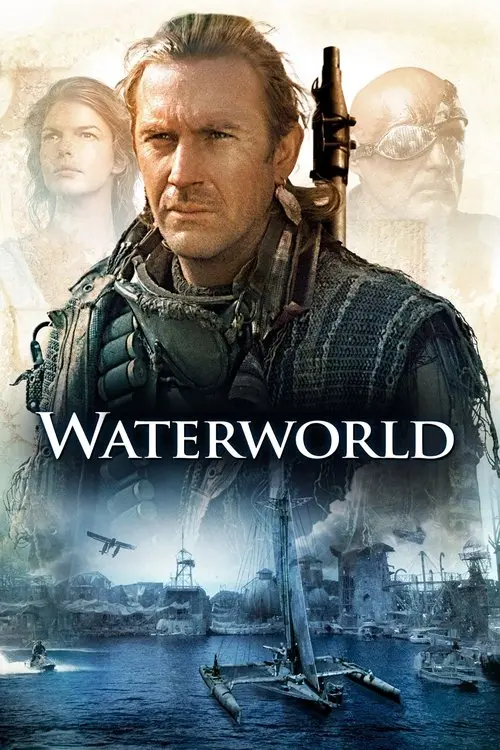
Waterworld
Beyond the horizon lies the secret to a new beginning.
Synopsis
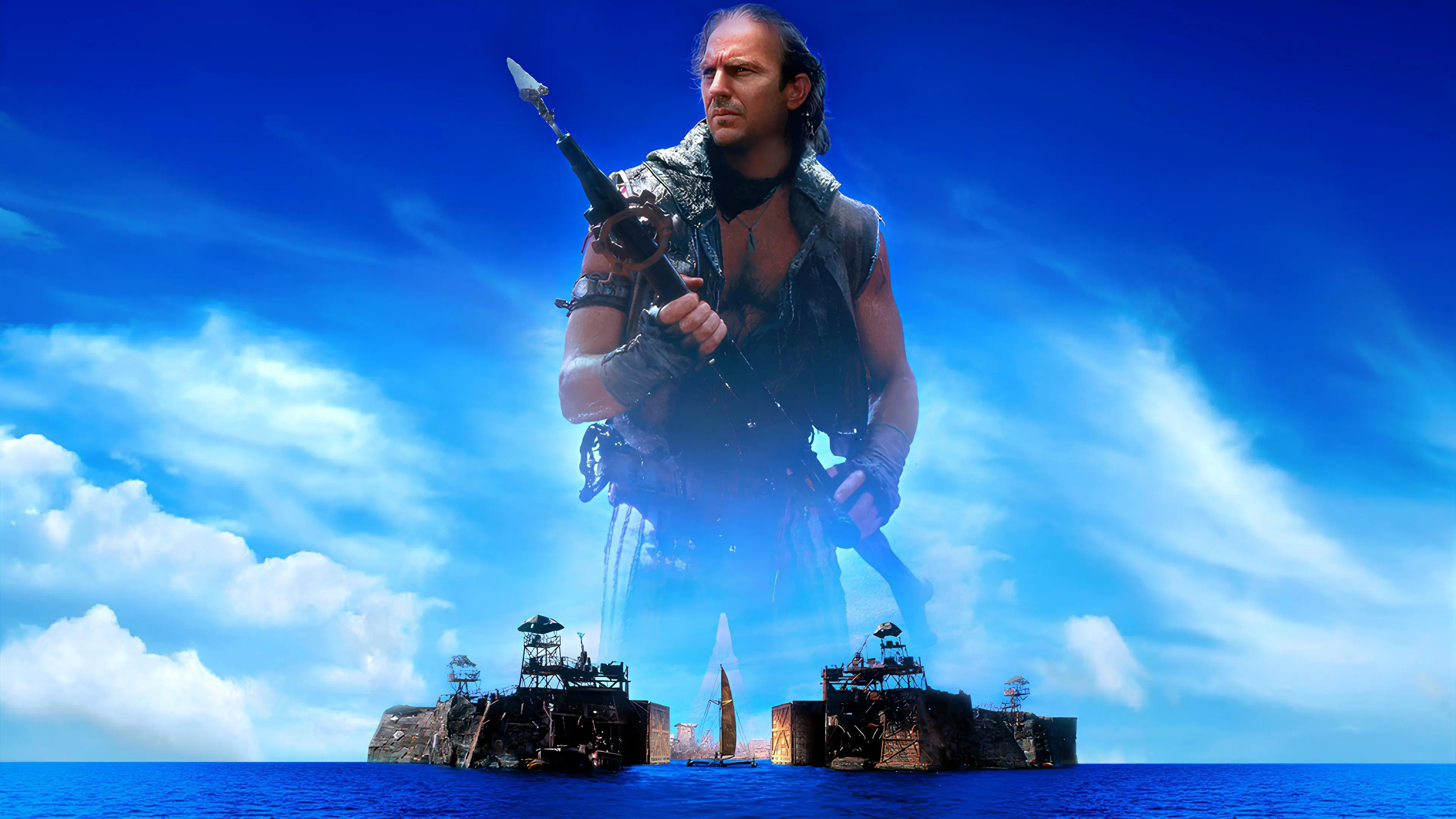
In a futuristic world where the polar ice caps have melted and made Earth a liquid planet, a beautiful barmaid rescues a mutant seafarer from a floating island prison. They escape, along with her young charge, Enola, and sail off aboard his ship. But the trio soon becomes the target of a menacing pirate who covets the map to 'Dryland'—which is tattooed on Enola's back.
Main Cast

Kevin Costner
Mariner
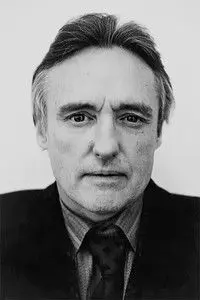
Dennis Hopper
Deacon

Jeanne Tripplehorn
Helen

Tina Majorino
Enola

R. D. Call
Enforcer

Gerard Murphy
Nord

Michael Jeter
Old Gregor

Rick Aviles
Gatesman

Kim Coates
Drifter

Chaim Jeraffi
Drifter
Trailer
User Reviews
John Chard
You're a fool to believe in something you've never seen. Waterworld is directed by Kevin Reynolds and jointly written by David Twohy, Peter Rader and Joss Whedon. It stars Kevin Costner, Dennis Hopper, Jeanne Tripplehorn, Tina Majorino, Michael Jeter and Gerard Murphy. Music is scored by James Newton Howard and cinematography by Dean Semler. It's the future and the polar ice caps have melted and the Earth is practically covered by the sea. As civilisation is forced to live on the water, their only hope is to one day find the fabled place known as Dryland. A Mariner drifter may hold the key to Dryland's whereabouts... It was by definition a troubled shoot, with sackings, difference of opinions, cost overruns, production set backs (hurricane destroying a hugely expensive set) and bad word of mouth generated by a film press intent on giving Kevin Costner a good kicking. Facts are, now that all the water has evaporated over the years, Waterworld is neither the flop or the bad film that many believed it to be. Should it be a better movie considering the gargantuan amounts of cash spent on it? Absolutely, without question! But Waterworld turned a decent profit in spite of its problems and mixed reviews, and now it firmly has a fan base willing to love it for the great sci-fi escapism that it is. Now readily available in 3 cuts (Theatrical, TV Edit and Ulysses), you can sample each to find the pros and cons of home format film tampering. Even in its theatrical form the film is still a rollicking water based adventure, full of spectacular stunts (oh my those jet-skis rock), amazing sets (whoosh, the sci-fi grandeur of the floating atoll) and blood pumping scenes (the eerie journey and subsequent revelation of a city under water). Sure it's far from flawless as the pace is uneven at times and as plot narratives go it's pretty thin, but Reynolds and Costner have crafted an impressive world submerged by water. The cast, too, are delivering knowing performances. Costner's Mariner is indeed one note, unsympathetic and moody, this guy is a loner and a mutation after all, his sombre persona neatly playing against Hopper's cartoonish, satirical and maniacal villain. Tripplehorn (a porn star name if ever there was one!) beautifully shines in a film populated predominantly by males (there's another flaw for you), Michael Jeter scores favourably as a highly strung elder, while young Majorino is suitably winsome, neatly playing it as a device to mellow the Mariner's cold fishy heart. Take that and fill it out with the detail of the definitive cut (Ulysses) which showcases Reynolds' vision and it's fan nirvana all round. If it was meant to be a serious picture in the first place, a sermon on topical destroying of the Earth, then it fails a touch because the characterisations are bound by cliché manacles. Yet collectively the inhabitants of this Waterworld share a common goal of survival, played out to the backdrop of Reynolds' excellent futuristic setting. When thrust together to make a good versus evil action movie, the characterisations work handsomely within that framework. That is ultimately the best way to enjoy Waterworld, let it wash over you (hrr hrr hrr) in a wave (hrr, OK I'll stop now) of water based action and heroics. It's a world where soil is currency and smoking is a marker for being a bad guy. From the opening shot of the Universal World logo becoming submerged in water, to the bittersweet finale, yes! Waterworld is indeed escapism in its purest cinematic form and becomes a high definition must in the process. 8/10
Filipe Manuel Neto
**Rather poorly edited and cut, this film is downright forgettable.** I've seen this movie twice, and I honestly can't believe it. It was truly the same as burning money. After being impressed by the poor quality of the film, I went to read and research about it, and discovered the eventual cause of this disaster: from the beginning, it was a project doomed to failure. Badly planned, it was filmed in a place where the weather conditions would cause problems. The ambition to do more and better is healthy, but in this case it caused an escalation of costs. To make things more difficult, the production was guided by Kevin's disagreement against Kevin, since the director, Kevin Reynolds, was contradicted several times by the main actor, Kevin Costner. The most blatant disagreement may have happened during post-production, with the actor and the studio demanding a straight cut of the film, which was lame and poorly edited. It had everything to go wrong... I know, now, that there are extended versions of the film, but I haven't found a "director's cut" that would be able to reverse the changes and give us the version that Reynold initially envisioned. What I saw is the “canonical version” of about two hours, and I hated it. The script is based on a very apocalyptic and poorly explained future, where the entire world is flooded, and a myth has been created where, somewhere, there would be land, but which no one has actually been able to confirm. The few surviving people live on atolls and artificial islands, and on boats. The film never shows us a storm, a hurricane or anything that threatens the lives of those survivors, nor does it explain how they survived, or why no one properly explores the world to discover signs of earth. There are a lot of loose ends and absurdities, and the film will only work if we avoid thinking about it too much. The cast rests solidly on Kevin Costner's back, and even those who aren't particularly fans of the actor will have to agree that he makes a good acting exercise, and is charismatic enough to ensure the role that is expected of him, especially if we're considering how indigestible and unsympathetic his character can be. Dennis Hopper is a likable villain, more cartoonish than truly menacing. Jeanne Tripplehorn is decent and satisfying. Technically, the film stands out for its commitment to excellent production values, with the effort and financial expenditure applied being clear: the choice of filming locations is very good, despite having brought many practical and logistical difficulties to the production; the cinematography takes every opportunity to make the film beautiful and elegant. The sets and costumes, made extremely realistically, are excellent, and you can see that they were expensive and detailed. The action scenes were well-thought-out and executed, and could have been better had the film not been structured for such a low rating. Good effects and a soundtrack that satisfies without enchanting make up the overall picture of a rather forgettable film.
misubisu
**Score: 8/10 An Ambitious, Misunderstood, and Genuinely Entertaining Epic** *Waterworld* has long been the punchline of Hollywood excess a byword for bloated budgets, troubled productions, and critical derision. Its TMDB score reflects this reputation, a casualty of its own mythologised failures. But watching it now, decades removed from the hype and the hatchet jobs, reveals a different truth: *Waterworld* is not the disaster it was painted to be. It is an ambitious, visually stunning, and genuinely entertaining piece of blockbuster filmmaking that deserves a serious reappraisal. It earns a strong **8/10** for its sheer audacity, its breathtaking production design, and its commitment to a vision that, while flawed, is never boring. **The Cinematography and World-Building: Grand and Immersive** The film's greatest achievement is its world. The post-apocalyptic waterworld a planet entirely submerged beneath endless ocean is rendered with immense scale and detail. The cinematography is grand, capturing the vast, lonely beauty of the open sea and the gritty, desperate reality of the floating atolls and rusting wrecks that house humanity's remnants. The production design, from the claustrophobic interiors of the *Deacon's* oil tanker to the improvised, ramshackle architecture of the atoll, is a triumph of imagination and craft. It is a world that feels lived-in, dangerous, and completely realised. Even the infamous "dirt" scene, where the Mariner trades a handful of soil for a woman, speaks to the film's thematic core: in a world without land, the most basic things become priceless. **The Premise: Bold, Dark, and Surprisingly Prescient** The central premise a world where polar ice caps have melted, and humanity survives on floating outposts was met with scepticism in 1995. Today, it feels eerily prescient. The film tackles themes of environmental collapse, resource scarcity, and the desperate lengths people will go to survive. It is a serious topic, and the film treats it with a degree of sincerity that is often overlooked. The Mariner's mutated gills and webbed feet, once derided as silly, now feel like a logical evolutionary adaptation to a drowning world. **The Villains: Clichéd, But Intentionally So** Yes, the villains are clichéd. Dennis Hopper's Deacon is a scenery-chewing, leather-clad pirate king who delivers his lines with a comic-book villainy that is a world away from the film's otherwise grim tone. He is a relic of a different kind of movie, and his presence does provide a comical tone to what is actually a serious topic. But there is an argument to be made that this tonal dissonance is deliberate. The Deacon represents the worst of humanity the greed, the cruelty, the desperate clinging to power and Hopper's performance, while broad, is never less than entertaining. He is a villain you love to hate, and he serves his purpose well. **What Holds It Back** The film's ambition is both its greatest strength and its most significant flaw. The story is episodic, feeling at times like a series of set pieces rather than a cohesive narrative. The emotional beats the relationship between the Mariner, Helen, and the child Enola are functional but never deeply moving. Kevin Costner's Mariner is a stoic, enigmatic figure, but his emotional journey feels somewhat muted. And yes, the film's runtime could have been trimmed without losing its essence. **The Verdict** *Waterworld* is an ambitious, flawed, yet deeply entertaining film. It is not the disaster its reputation suggests. It is a bold vision of a drowning world, filled with stunning visuals, memorable set pieces, and a commitment to practical filmmaking that feels increasingly rare. It is a film that earns its place alongside the great, flawed epics of 90s cinema a movie that swings for the fences and, while not always connecting, never stops swinging. **Watch if:** You appreciate ambitious world-building, practical effects, and films that dare to be different. **Skip if:** You require tight plotting, subtle villains, or a narrative that doesn't occasionally sail into the absurd. This is a film that embraces its own excess.