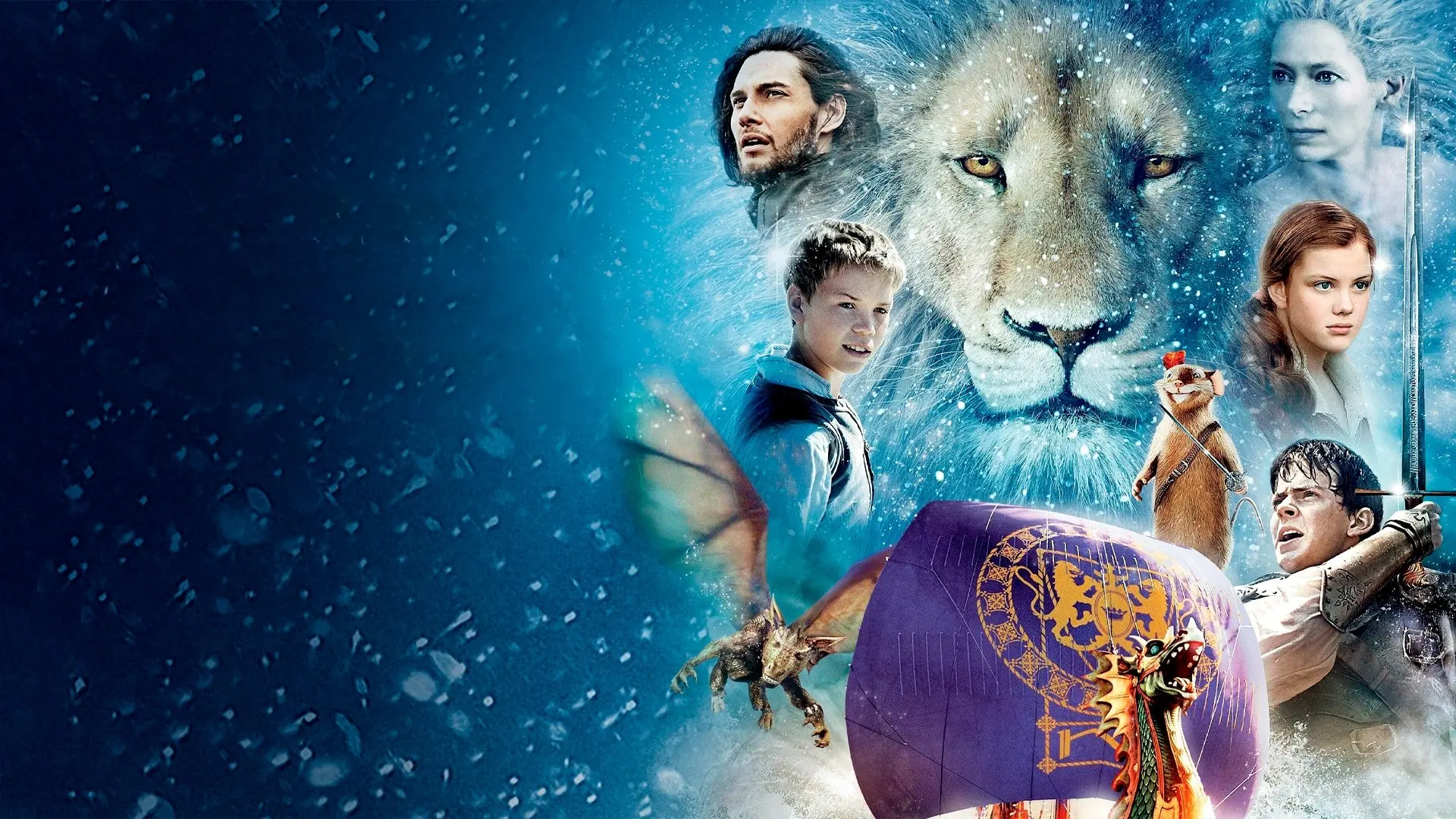
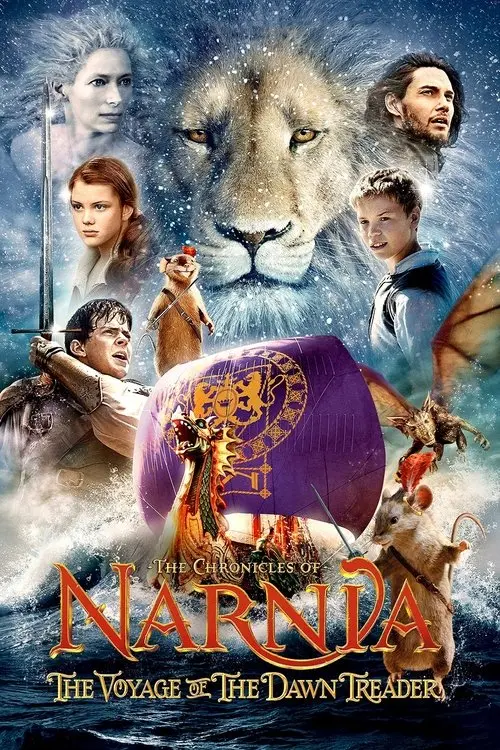
The Chronicles of Narnia: The Voyage of the Dawn Treader
Return to magic. Return to hope. Return to Narnia.
Synopsis
This time around Edmund and Lucy Pevensie, along with their pesky cousin Eustace Scrubb find themselves swallowed into a painting and on to a fantastic Narnian ship headed for the very edges of the world.
Main Cast

Georgie Henley
Lucy Pevensie

Skandar Keynes
Edmund Pevensie
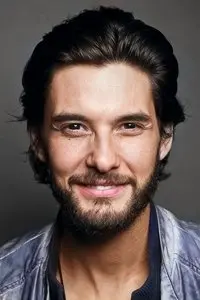
Ben Barnes
Caspian

Will Poulter
Eustace Scrubb

Anna Popplewell
Susan Pevensie

Tilda Swinton
White Witch
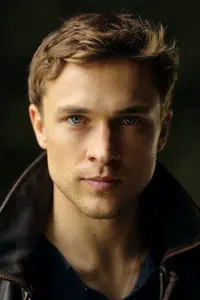
William Moseley
Peter Pevensie

Simon Pegg
Reepicheep (Voice)

Liam Neeson
Aslan (voice)

Laura Brent
Liliandil
Trailer
User Reviews
Matt Golden
In the immortal words of Col. Kurtz, "The horror...the horror." Marlon Brando wasn't speaking of this film, of course, but rather the horrors of the Vietnam War. The sentiment remains applicable. When I write reviews, I do try to give at least a modicum of context, be it a history of the film itself, predecessors to its place in cinema history, or my general feelings on the type of film. In this case, I've just referenced Francis Ford Coppola's classic take on Joseph Conrad's "Heart of Darkness," Apocalypse Now. What does that have to do with Dawn Treader? Nothing, and I couldn't be happier. Why? Because it's distracted my mind with thoughts of a far, far better film. Allow me my few moments of happiness before I have to rifle through the dark filing cabinet of my mind to marshal my thoughts on this atrocity.\ What went so wrong here, you may ask? We'll start with the history of this franchise. I do not have the highest opinion of this series. We started out with the most famous of C. S. Lewis' Narnia cycle, The Lion, The Witch, and the Wardrobe. I don't know...perhaps if we hadn't been in the middle of such a fantasy film renaissance, I would have found it more palatable. Instead, coming on the heels of Peter Jackson's generation-defining Lord of the Rings trilogy, and the high class and quality of the Harry Potter franchise, that weak take on a book series that didn't thrill me as a child struck me as a cheap, childish appetizer compared to the magnificent feasts audiences had already been served, their stories facile, their acting (aside from a typically great Tilda Swinton) either poor or phoned-in (Paging Mr. Neeson, your paycheck is waiting for you). SHREK co-director Andrew Adamson was the helmer of both Wardrobe and Caspian, and I had hoped those film's failings were due perhaps to his inexperience as a director of live-action. The first film of course wore its Christian allegory on its sleeve (Lewis, for all his writings, never managed to find the definition of "subtle"), and it found favor with the churchgoing crowd, whose turnout afforded it a huge box office windfall. The second film was more of a straight actioner (in the vein of Star Wars Episode I, which is to say the supposed action was mired in a swamp of facile and achingly dull political machinations), and didn't find purchase with the same demographic, and box office returns were disappointingly low. Disney, who had financed the films, saw the writing on the wall, and dropped the series. That should have been the end of it. Until 20th Century Fox stepped in. Now, let's remember: Fox doesn't have the best track record with adapting beloved fantasy series into films (a moment of silence for the tragedies that were The Dark is Rising and Eregon, please). Hiring Michael Apted as the director seemed to be bucking the trend of shoveling out crap. Apted isn't really known as an action, fantasy, or epic film director, but he showed promise with the last Pierce Brosnan/James Bond film, The World is Not Enough (I'll not blame him for Denise Richards'...nuclear physicist...sigh). Still, director in place, 20th Century Fox and Walden Media cobbled together another Narnia adventure, and the results were predictably terrible. Honestly, I wish I hadn't expected a poor film going in. Because this film not only met but exceeded my expectations of terrible, and it's not because I was pre-judging it. It's because it was simply that bad. The plot is nonsensical, randomly shunting characters from one loosely-connected vignette to the next, with hokey dialogue and dire predictions of eeeevil standing in for actual menace or intrigue. It's a shaggy dog road trip story, waterlogged on a boat, and I found myself half an hour in wishing desperately that the characters would all get scurvy and die. The plot's so thinly-sketched that I may as well not even try to recount it here, but it has something to do with two of the kids from previous films being once again pulled into Narnia at absolute random, with no thematic or plot reason for any of the nonsense in the first place. Once there, our cast is rounded out with their exceptionally annoying cousin, and despite no one knowing quite what's going on, they stumble upon the titular character of the second film, Prince Caspian, and join him on his completely random quest to recover seven old friends of his long-dead father who disappeared for some reason, and no one knows why. So they fight an island made of evil. Good wins, evil is defeated, the end. Please, let it be the end. Listen: I love fantasy. I love science fiction, I love horror, I love all of the outré genres, the fantastic, the unreal. It fascinates me, and I love wrapping myself in the trappings of the genre like a favored blanket, letting their comforting warmth wash over me in waves of escapism and nostalgia. But this half-assed bunch of hokum had me rolling my eyes, with the stilted dialogue and the hastily-sketched characters and the nonsensical plot and the ARGH it's too much. The icing on this crap cake was the ham-handed, in-no-uncertain-terms Christian allegory with which the film beat the audience over the head with all the grace, power, and strength of an industrial-size sledgehammer. Yes, the evil was SIN. And Aslan is JESUS. Who exists as a lion in an alternate universe or something, apparently. Who pulls children into this alternate universe at random for...no apparent reason whatsoever (the film explicitly states that it's "to know Him (Aslan i.e. Jesus, in case you didn't already pick up on that) better," but if that's the case, why just these four kids? What's the thematic point of this? Why were the elder kids now judged worthy of not having watery allegory poured down their throats again? What did these kids learn at the end of this film that made them better people? ARGH again. I cannot even begin to catalogue the problems with this series, from either the internal "logic" of the series or the external logic of the human brain. Doing so only hurts my head. Remember how I said the second film in the series lacked the ham-fisted Christian allegory of the first? Well, 20th Century Fox apparently recognized the church-going demographic was what made the first film such a success, and had them ramp up the religious content from "allegory" to "explicit yelling at the audience and rubbing its nose in it like it's a puppy who peed on the carpet." This sentiment struck me as wholly insincere, a manufactured "message" shoehorned in by a film studio who wanted nothing more than to reap the box office rewards of the first film which felt, though unsubtle, genuine in its intentions. I've seen films more poorly shot, more poorly acted, more poorly assembled. But this boring, useless, preachy slog with no purpose or point had me at the absolute end of my rope. Rare is it that I sit in a darkened theater constantly looking at my watch, biding my time, aching for the dross on the screen to end so that I simply don't have to endure it anymore. But that's exactly what happened with this film. Before anyone jumps on the obvious point of attack, let me say in no uncertain terms that I am Christian. But (and this is an exceptionally important point) just because a the message of a particular film/book/song/etc. is Christian doesn't make the work inherently good. Nor does criticism of the work in some way equal an anti-Christian sentiment. I often feel that works perceived as "Christian" get a free pass on quality because of their message, but quality doesn't work like that. Lowering one's standards results only in mediocre pablum like this continuing to be passed off for media conglomerates to make a quick, insincere buck. Do me a favor. If you've enjoyed these films, fine. I whole-heartedly disagree, but I'm certainly not going to tell you you're wrong for enjoying them. But I beg of you: Don't shut off the critical area of your brain just because something agrees with your worldview. Doing so is a disservice not only to yourself, but everyone else like you who has to suffer through trash like this.
talisencrw
Growing up in the Canada in the 70's and 80's, I fondly recall vastly enjoying an animated version of Lewis' 'The Lion, the Witch and the Wardrobe' that was presented by Kraft on CTV. Now as a father of a son, I want to see with him the contemporary versions of the books I adored in my youth, though at present I greatly prefer the craftsmanship of cinema pre-1970. It never bothers me in the slightest, to the ire of my more obsessive-compulsive cinephilic friends, seeing films of series with complete disregard to their order (one of my friends nearly had a heart attack, when he discovered I had watched 'Spider-Man 3' without having previously watched films 1 and 2--don't even get me started about the 'Harry Potter' series...), so, especially curious about how one of my favourite contemporary directors, Michael Apted, would do in the realm of big-budget, CGI-intensive fantasy filmmaking (I expected a fish-out-of-water, like Lord Richard Attenborough helming 'A Chorus Line'), I gave this a shot. I enjoyed this more than 'Harry Potter' films I have seen, though it does stretch things from the literary works, but unfortunately, that seems to be the way things are, since film became less about artistry and more about business (just see at Toys R Us how many possible toys you can purchase, and similar commercial off-shoots, and I don't even consider this series a major player in this sort of area, because of its Christian undertones, which really doesn't mesh perfectly with selling tons of toys, though of course the realms aren't mutually exclusive, not by any stretch of the imagination). I think that Apted did a decent job, especially considering that yes, he is a fine director, but this isn't really his cup of tea. I distinctly feel that if these films are your comfort food, you won't be disappointed. I look forward to checking out the series' two preceding entries, and, though they left an opportunity for more films, which I believe wouldn't be from Lewis' works at all, it was a nice summation at its conclusion. Finally, it was great to see (or at the very least, hear) Tilda Swinton, Liam Neeson and Simon Pegg, they seem to be thrown in everything these days. I heartily salute their agents--they must have the very best in the business.
r96sk
I wouldn't class this as a good or bad film, it's in a weird sorta in-between to me. <em>'The Chronicles of Narnia: The Voyage of the Dawn Treader'</em> is, comparatively, bad. It loses the vibe and all the intrigue that the first film has, as it continues the downward trajectory set by the other sequel. However, it's still just about got a decent adventure feel to it. Only two of the youngsters reprise their roles 'properly', those being Georgie Henley (Lucy) and Skandar Keynes (Edmund). I'd always prefer a cast to remain the same, but if I'm honest this doesn't miss William Moseley (Peter) and Anna Popplewell (Susan) all that much. That argument is helped by the arrival of a young Will Poulter as Eustace. He's great. Plot-wise is where it gets meh. I didn't care for it, even if I did like its swashbuckling nature. I can see many finding enjoyment with it, but for me it doesn't quite come out positively unfortunately - it's sluggish. The ship set also feels rather cheap. Not at all a bad film; one that was interestingly made without the involvement of Disney, Walden Media joined up with Fox instead. I just couldn't find enough entertainment in it.
CinemaSerf
Whilst this third in the adaptations of CS Lewis' "Narnia" stories is still enjoyable to watch; it's fair to say that it bears little resemblance to the original book and that is a shame. We only have two "Pevensie" children ("Lucy" & "Edmund") summoned back in this film alongside, accidentally, their cowardly but loudmouthed cousin "Eustace" (Will Poulter). They arrive just in time to be rescued from the middle of the sea by a passing King "Caspian" (Ben Barnes) on his ship "The Dawn Treader" and wonder why they have been recalled. We soon find out that they must all get to the "Lone Islands" before a green mist envelops the whole kingdom. We've plenty of action, battles, some mysterious invisible dwarves and even a wee bit of excess testosterone en route to quite an exciting conclusion. Insofar as it goes, the kids - now, really young adults - do well (Poulter is quite entertaining as their whinging, spoilt relative) as do Barnes and this time Simon Pegg takes over as "Reepicheep". The effects are definitely better, but they do need to be - the story isn't so good and struggles at times to get up any decent head of steam. It is still colourful and fun, though - but sadly demonstrative that the franchise has now run out of oomph!
Vinicius Monteiro
Nostalgia has a funny way of tricking us when we revisit things we loved when we were younger. Sitting down to watch the third chapter of the Narnia saga brought up this inevitable conflict for me: the fondness I have for that universe clashing with the totally real frustration over some questionable narrative choices. This voyage ends up showing not just what happens to the Pevensie siblings, but the structural limits of a franchise that fought hard not to lose its identity under commercial pressure. Watching the ship’s purple sails catch the wind, it’s clear that the magic we were promised swings between flashes of pure beauty and stumbles that are hard to ignore. I noticed the main cast’s performances were really up and down throughout the trip, making things feel pretty disconnected on screen. Skandar Keynes (Edmund) and Georgie Henley (Lucy) just didn’t seem to have that same vibrant energy from the previous movies. During a lot of the exposition-heavy dialogue, their acting felt flat, almost like they were tired of playing these roles or just bored by the stiff script they were given. But there is a silver lining. I really liked seeing Lucy and Edmund leading the charge on their own. They knew how to carry the weight of that responsibility, dealing with their own insecurities without always being in their older siblings' shadows. I missed Peter and Susan, sure, and their brief magical cameos felt like forced fan service shoved into the script. The absolute saving grace, acting-wise, goes by the name of Will Poulter. I was completely blown away by his Eustace. At first, the kid annoyed me to no end—a very faithful recreation of what we read in the book. And his believable coming-of-age arc ended up being, by far, the biggest human triumph of the movie. Bringing in a veteran like Michael Apted to direct didn’t save the day, and that’s one of the things that hurt the adaptation the most. I found his work incredibly bureaucratic and lacking that majestic visual creativity that high fantasy demands. He steered the production on a dull kind of autopilot. It felt like there was no real passion for the original book, resulting in a stiff, soulless product. Where the saga’s previous directors tried to bring a sense of grandeur, Apted took the safest, most corporate route possible. It lacked a bold vision to translate Lewis's poetic magic to the screen, and that lack of risk-taking directly reflects in how apathetically the movie connects with its audience. At least the art direction makes a genuine effort to keep us immersed. I thought the production design was gorgeous for most of the runtime. The Dawn Treader ship itself is packed with practical nautical details, from the carved wood to the majestic sails, giving it an excellent, tactile realism. I was mesmerized by the strong, warm colors of the coastal sets, which really help set an infectious mood of maritime exploration. The Narnian world managed to keep some of its trademark beauty. The problem is that, even with all this tangible technical effort, the inexplicable, magical wonder from the start of the franchise seems to have gotten lost along the way. The universe is still aesthetically polished, but it doesn't pulse with that same organic life it used to have. If the visuals and the script are all over the place, the sound wraps us up tight and makes the trip at least bearable. The original score hooked me in a wonderful way, perfectly complementing both the high-tension storm moments and the quiet, purely emotional resolutions. I felt the melodies managed to elevate my experience to levels the script just couldn't support. They brought the necessary epic weight to key moments, elegantly masking the pacing issues. In the final minutes, the soundtrack becomes the true soul of the story, making the farewell scene unforgettable and heavy with a melancholy that really sticks with you. The visual inconsistency really hits you in the face. On one hand, I was amazed by the emotional sequence where Eustace turns into a dragon. The way the anguish and acceptance are conveyed there, in deep silence and through very expressive CGI, is a huge win. It’s a scene full of dramatic weight that perfectly captures the kid’s redemption. But then comes the cold shower. In several other critical moments of the adventure, the special effects looked incredibly cheap and dated to me. The giant sea monster and some of the scene transitions reminded me of low-budget TV VFX, immediately breaking any suspension of disbelief. It’s frustrating to see a production of this size drop the ball during visual climaxes. The story clearly tries to go back to a classic format focused on exploring mysterious islands. I’ll admit, this episodic setup kept me pretty curious at first, with a smooth pace that matched the rocking of the ship. But as the clock ticks on, the narrative structure turns into a frustrating mess. I got the distinct impression that the development of some islands was way too rushed, not giving me enough time to soak in the real dangers of the place or the dilemmas of the people there. It felt like I was watching a generic video game, with the characters frantically running from level to level just to collect a set of magical swords. I felt deeply bored sitting through shallow dialogue that was only there to spoon-feed obvious information, checking my watch over and over hoping for a clever plot twist. The overall vibe took a heavy hit, becoming noticeably childish and harmless. This disappointed me on multiple levels, especially after the shift to the darker, more violent tone that Prince Caspian reached in the previous film. I genuinely expected the franchise to keep maturing alongside its audience. The dramatic scenes thrown in to force a few tears felt artificial, clashing with the script's lack of energy. Even so, one monumental win survived this transition. The careful way the Christian themes of temptation, vanity, and faith were woven between the lines really touched me. And Reepicheep's unwavering nobility, developing a beautiful and hilarious friendship with Eustace, helped bring some heart and morality back to the screen. As a reader who grew up totally absorbed in C.S. Lewis's books, I was super bothered by the writers' audacity in tearing apart the source material. The original book is, at its core, a reflective, contemplative journey of pure self-discovery in the face of the unknown. By turning this poetic premise into a cliché Hollywood treasure hunt, they didn't just mess up the narrative order of the islands, but they compromised the central philosophy of the voyage. I tried to clear my mind and ignore these details to judge the movie on its own. It's almost impossible. I felt like they disrespected the book's structure, trading deep psychological development for generic, loud rushing around. The inclusion of this "green mist" as the story's big villainous force left me baffled. I totally get that big studios usually demand a physical, urgent threat to center the conflict and hook casual audiences, but the execution of this idea was mediocre at best. This invention ended up stealing precious screen time that rightfully should have been spent on the dynamic and the rich internal struggles of the Dawn Treader crew. The producers took incredibly dense moral conflicts—like each character's internal fears—and turned them into an empty visual obstacle in the form of digital smoke that isn't actually scary. When it came out, I caved to the trend at the time and chose to watch the 3D version in theaters. Honestly, the technology added absolutely zero value to my immersion in the story. If anything, it was a brutal detractor. Using the dark lenses of that era's tech made the projection extremely dim and dull, shamelessly murdering the beautiful, meticulous coloring work the art direction team fought so hard to create. I walked out of the theater deeply regretting not going for the traditional 2D showing, where I could have properly admired the sparkling Narnian waters and the sun hitting the ship's sails. Maybe my biggest frustration is how they handled the great lion creator of Narnia. In his limited and bureaucratic appearances, Aslan felt brutally reduced to a simple plot device. He shows up out of nowhere, reaches out a paw to arbitrarily solve problems when the heroes fail, gives a quick sermon, and vanishes. That overwhelming mystical aura, the solemn respect, and the untouchable majesty that were flawlessly built in the first two movies just ceased to exist. It’s painful to watch the peak of Narnian mythology be treated like an act-closing narrative band-aid. The end of the journey on the sandy beach brings a message about growing up and leaving the past behind that hits right in the feels. Lucy and Edmund’s farewell scene left a real lump in my throat, offering an honorable, very dignified, and quite melancholic closure to their arc. However, looking at the big picture of the movie as a whole, this ending has a heavy, almost funeral-like weight to it. To me, the inconsistency of this film represented the final, painful nail in the coffin for the Narnia universe at major studios. It buried once and for all the hope fans had of seeing the remaining books adapted with any real grandeur. It’s a bitter feeling to witness a saga that started so brilliantly fade into forgettable mediocrity. The Voyage of the Dawn Treader is a bumpy boat ride that loses its way most of the time, struggling to balance the greatness of a modern classic with failed marketing mandates. The genuine growth of characters like Eustace and the power of its immersive soundtrack carry some of the few living sparks of the magic that captivated a generation. I suggest you make some room on the couch, jump in with an open mind, and brave the Narnian waters for yourself. After all, the organic beauty of cinema lies in the many different perspectives it sparks. It’s worth the watch to weigh these ups and downs, reach your own verdict, and find out what's left of your Narnia after the storm passes.